The discussion on the module covered various aspects of the use of digital technologies in different professional fields. In particular, when writing my posts, such activity allowed systemizing the understanding of the pros and cons of digital marketing, as I focused on that in detail. The evident shift from the traditional marketing to digital marketing has created both the benefits and challenges for the marketing specialists. As I have mentioned in my blog post 2, when it comes to the benefits, digital marketing activities allow for more precise and easier targeting of the relevant consumer groups and such promotional activities implemented through the digital channels is commonly cheaper. Besides, the digital marketing campaigns might be run for a reduced period of time though generating the same results. At the same time, the need to find a balance between the conventional and new digital marketing tools and effectively use such digital tools makes the job of marketing teams more complicated, requiring larger creativity from them. At the same time, it might be argued that the use of digital technologies and their value in the field of marketing will continue to grow. In particular, the marketing communications will largely benefits from such technological solutions as Artificial Intelligence, high-speed 5G internet, moveable pamphlets, and even robots. Such discussion and analysis made me better understand that each issues should be reviewed from two perspective as there will always be both the positive and negative sides of a matter
My comments:
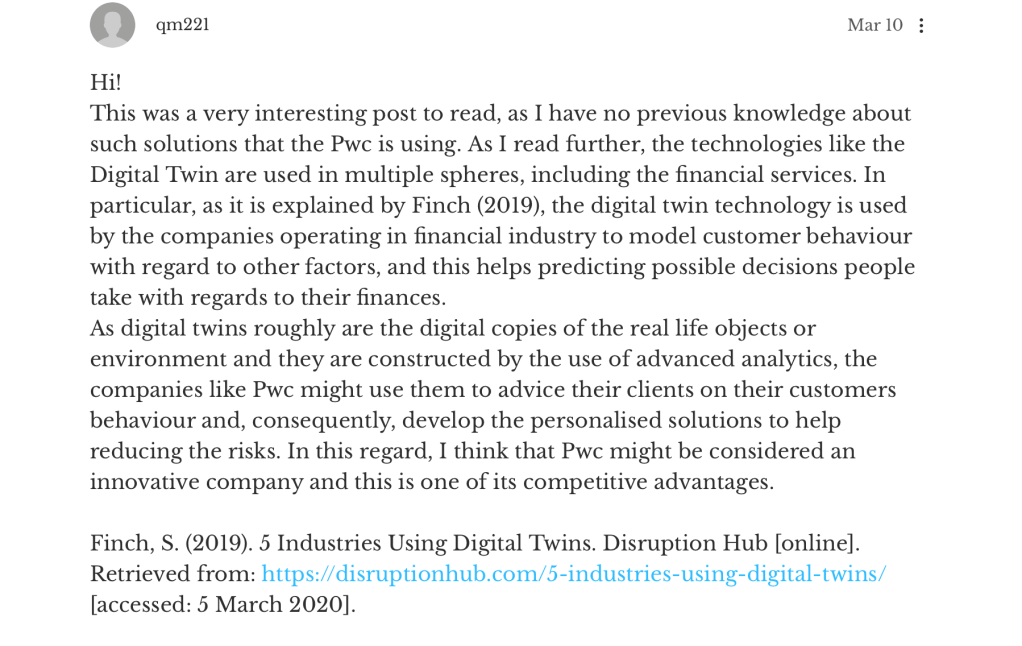

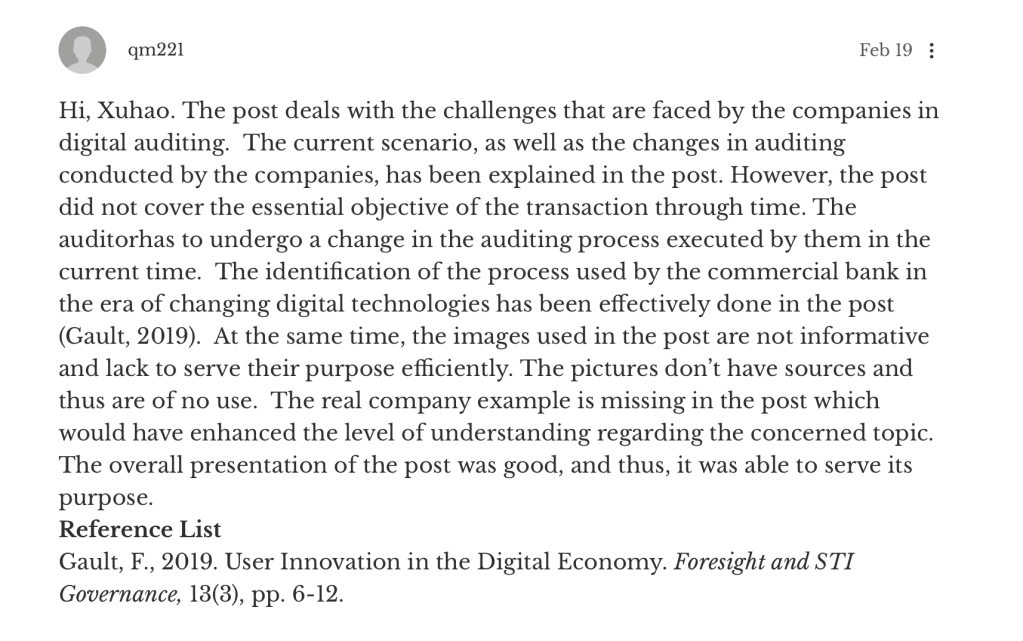
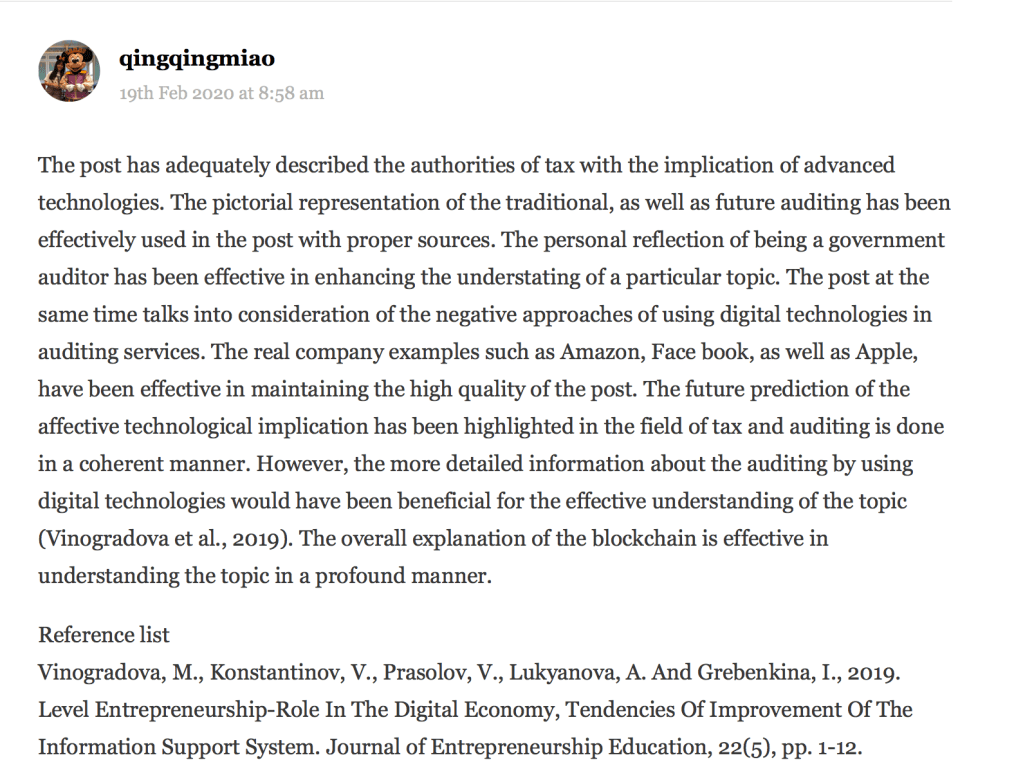
The posts written by other students were particularly interesting to read as they covered the areas of tax and general audit and explained how the innovative technological solutions have facilitated such processes and tasks. For instance, in the post on the use of technologies in tax audit, the author mentions that previously such work was mainly paper-based and consisted in collecting large amount of papers and documents and further manual processing of all the data. While now technologies are largely used to accelerate and facilitate the procedure, the author who has worked as a government tax auditor explains that they still should be used as supplementary tools and not to replace the humans. Similar idea was expressed in another post on the role of digitalisation in business audit at large. The larger adoption of electronic programs to generate and collect the invoices, vouchers, and account books makes the work of auditors easier but similarly to the marketing sphere it also creates certain challenges that should be taken into account.
Post 2 Article:
https://hx2370.wixsite.com/mysite/post/changes-brought-about-by-digital-audit
Post 3 Article:
https://hlc229.wixsite.com/hannahcookson/post/a-unicorn-born-from-the-digital-ashes
 My BEMM129 Journey